



The Most Common Orthopedic Problems in Pets: Symptoms and Difficulties with Movement
Kretanje je važan dio svakodnevnog života svakog ljubimca – od igre i trčanja do običnog ustajanja iz ležaja. No, baš kao i ljudi, psi i mačke mogu razviti različite probleme sa zglobovima, kostima, ligamentima i mišićima koji im mogu otežati kretanje i uzrokovati bol.
Ortopedske bolesti često se razvijaju postupno, pa ih vlasnici ponekad primijete tek kada promjene postanu izraženije. Blago šepanje, sporije ustajanje ili izbjegavanje aktivnosti koje su prije ljubimcu bile omiljene mogu biti prvi znak da nešto nije u redu.
Među najčešćim ortopedskim problemima kod pasa i mačaka ističu se osteoartritis (artroza), ruptura prednjeg križnog ligamenta koljena, luksacija patele te upalne promjene tetiva.
Osteoarthritis (Arthrosis) – the Most Common Cause of Mobility Problems
Osteoarthritis or arthrosis is a degenerative joint disease that most commonly affects older dogs, but it can also occur in younger animals. It develops when there is gradual damage to the joint cartilage and changes to the bones that form the joint.
The causes of osteoarthritis development can vary. In some dogs, it is a consequence of improper joint development, such as hip or elbow dysplasia, while in others it develops after injuries, fractures, excessive strain, or as a result of the natural aging process.
When cartilage begins to deteriorate, the joint no longer functions as smoothly as it once did. Pain, stiffness, and reduced range of motion occur, and the pet gradually begins to avoid activities that were once normal.
The most common signs include:
• difficulty or slower getting up
• stiffness after resting
• limping of varying intensity
• avoiding stairs, jumping, or longer walks
• reduced desire to play and move
• pain when touching or moving the joint
In cats, recognizing these problems is often more challenging because they usually hide pain. Changes may be noticed through their behavior – for example, a cat may climb less, stop jumping to favorite places, play less, or start looking for an easier-to-access place to eliminate.
It is important to know that reduced activity can further worsen the problem because it leads to loss of muscle mass and increased body weight, which puts additional strain on the joints.
Cranial Cruciate Ligament Rupture – A Common Cause of Lameness in Dogs
Cranial cruciate ligament rupture is one of the most common orthopedic diseases in dogs. It is an injury to the ligament that plays an important role in stabilizing the knee joint.
Various factors can contribute to the development of this problem, including repetitive micro-injuries, insufficient physical conditioning, excessive body weight, and existing changes within the joint itself.
After the ligament ruptures, a dog often suddenly begins to avoid using the leg and stops putting weight on it. Although it may appear that the condition improves after several weeks, the knee can remain unstable, which can eventually lead to the development of painful degenerative changes – osteoarthritis.
The most common signs are:
• sudden lameness of the hind leg
• avoiding putting weight on the leg
• difficulty getting up
• pain and swelling of the knee
• reduced activity
In addition to complete rupture, there is also a partial ligament rupture, which can be more difficult to recognize but may progress to a complete rupture over time.
Treatment depends on several factors, including the size of the dog, the degree of damage, and the animal’s lifestyle. In some patients, conservative treatment with controlled activity, physical therapy, and appropriate joint support may be possible, while surgical intervention is recommended for others.
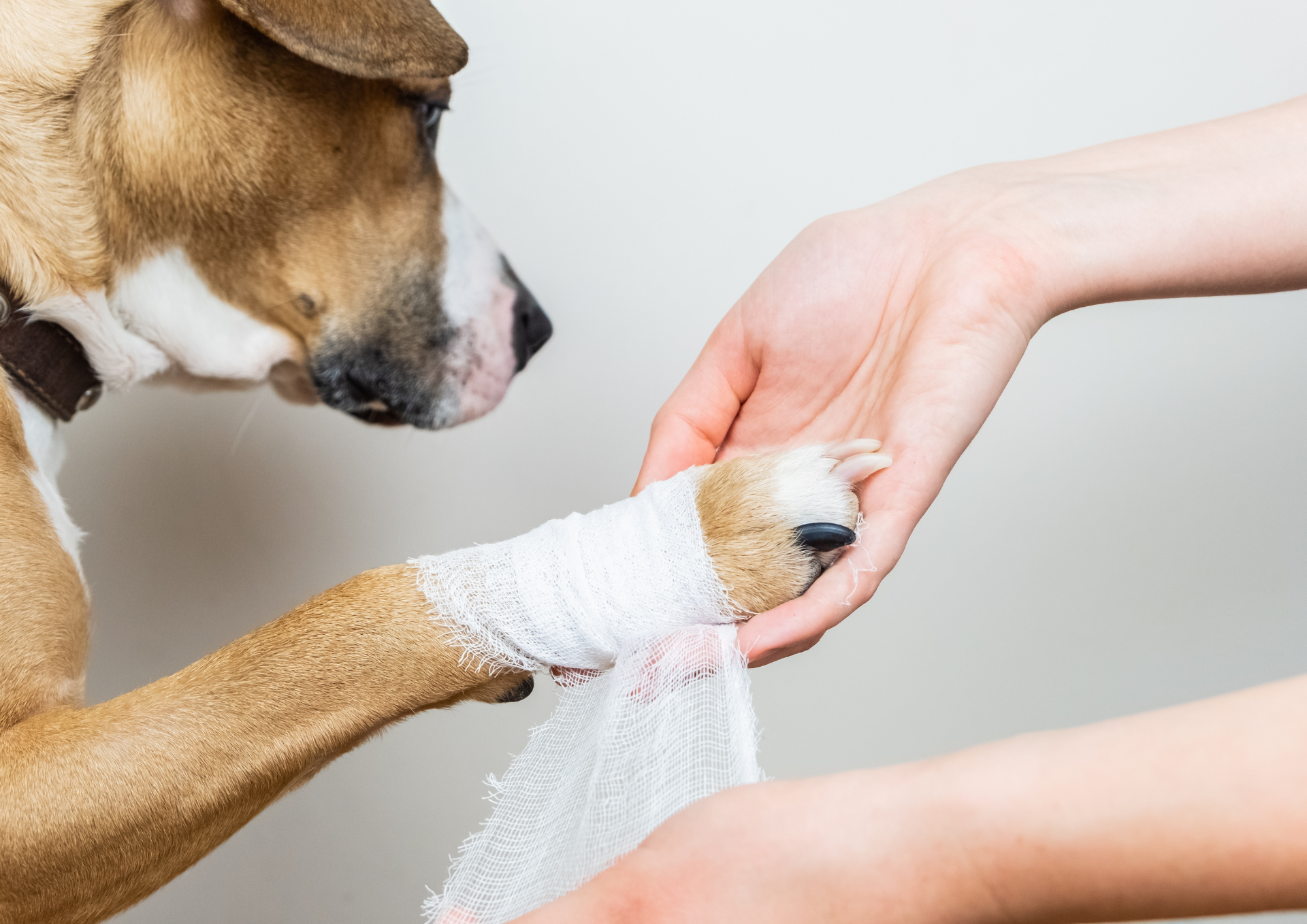
Patellar Luxation – A Problem Often Seen in Small Breeds
Patellar luxation refers to the displacement of the kneecap (patella) from its normal position in the knee joint. It most commonly occurs in small dog breeds, but it can also appear in larger breeds.
The cause often lies in abnormalities in the structure of the knee and hind limbs, and in some cases it can also occur as a result of injury.
Symptoms of patellar luxation:
• occasional lifting of the hind leg while walking
• skipping several steps
• occasional or constant limping
• changes in the way of moving
Patellar luxation is classified according to the severity of the condition. In milder cases, physical therapy and muscle strengthening may be attempted, while more pronounced changes usually require surgical treatment.
The goal of treatment is to restore knee stability and enable proper movement in order to reduce the possibility of developing later painful changes such as osteoarthritis.
Biceps Tendon Inflammation – A Common Problem in Active and Larger Dogs
Inflammatory changes of the biceps muscle tendon can be one of the reasons why a dog begins limping on a front leg. They most commonly occur in medium-sized and large breeds, especially in dogs that are not regularly conditioned but occasionally engage in intense activities such as running or jumping.
Excessive strain or repetitive injuries can lead to damage of the tendon fibers, pain, and limited movement in the shoulder joint area.
Signs that may indicate this problem:
• occasional lameness of the front leg
• worsening after activity
• pain when moving the shoulder
• reduced activity
• loss of muscle mass in the shoulder blade area
The diagnosis is made through an orthopedic examination, and additional methods such as radiographs or other diagnostic tests may be used if necessary.
Treatment most often includes rest, controlled return to activity, pain and inflammation medication, and physical therapy. In some patients, surgical treatment may also be required.
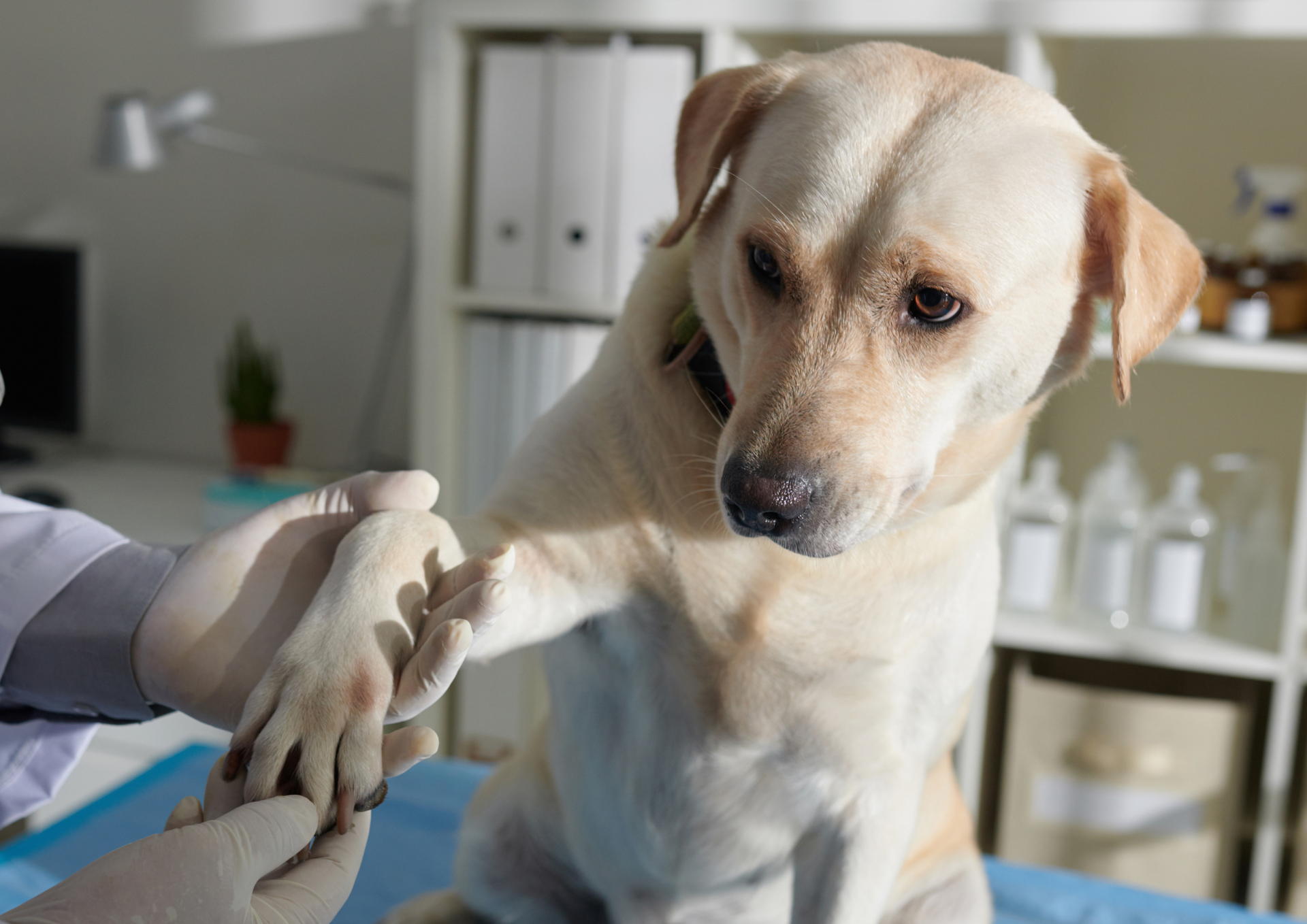
When Should You Seek Professional Veterinary Help?
Any change in the way your pet moves should be taken seriously. Dogs and cats often hide pain well, so even small changes can be a sign of an underlying problem.
A veterinary examination is recommended if you notice:
• persistent or occasional limping
• difficulty getting up
• reduced desire for walks or play
• avoiding stairs and jumping
• behavioral changes related to movement
Early recognition of orthopedic problems enables timely treatment and can significantly improve your pet’s quality of life.
With appropriate therapy, weight control, adapted activity, and regular veterinary check-ups, many dogs and cats can remain active for a long time and enjoy their daily activities without pain.
Frequently Asked Questions (FAQ)
How can I tell if my dog or cat has joint pain?
Pain can be shown through limping, stiffness, slower getting up, reduced activity, or changes in behavior.
Is osteoarthritis a problem that only occurs in older pets?
No. Although it is more common in older animals, it can also develop in younger dogs and cats due to hereditary problems, injuries, or improper strain on the joints.
Does every dog with a cruciate ligament rupture need surgery?
Not necessarily. The treatment decision depends on several factors and is made after an orthopedic examination.
Can orthopedic diseases be prevented?
Not all problems can be completely prevented, but maintaining an appropriate body weight, proper activity, and good physical condition can significantly reduce the risk.
When is limping a reason to visit a veterinarian?
If limping persists, occurs repeatedly, or is accompanied by pain, reduced activity, or changes in behavior, a veterinary examination is recommended.
Lea Kreszinger, DMV
Veterinary clinic BUBA